
On 22 June 2021, IDEAS held an online event entitled “Report Launch: Corruption in the Supply Chain – Forms and Impact on Consumer”. The event was in conjunction with launching a joint report between IDEAS and Coalition for Business Integrity (CBI), “Corruption in the Supply Chain”. The panellists for the event were YB Dr Lee Boon Chye, MP of Gopeng and former Deputy Health Minister; Alex Tan, Partner, Risk Consulting Leader at PricewaterhouseCoopers (PwC); R. Nadeswaran, activist and former journalist; Jonson Chong, Core Team at #RasuahBusters; and Dr Haji Mazlan Haji Ahmad, Deputy President of Malaysia Corruption Watch.In his opening remark, Mark Chay, CEO of CBI, said per capita income increases with Corruption Perception Index (CPI) score as he showed the graf for Malaysia, Singapore, South Korea, Hong Kong, and Taiwan. He also listed out impacts of corruption on the economy; among them are high prices of low-quality goods and services, the inefficiency of resource distribution, uneven distribution of wealth and low stimulus for innovation. Mark also stated that according to Transparency International 2021 survey, 50% of business operations in Malaysia lost their businesses due to competitor’s bribery. Tricia Yeoh, CEO of IDEAS, highlighted that governance is vital for any flourishing economy. The return of investors’ confidence and investments into the country requires predictability and an environment that have stability. A political economy in which investors, private sectors and consumers will appreciate how they can go about their business requires corruption does not feature heavily to achieve a predictable environment. She also mentioned that corruption increases the cost of living, goods and services become more expensive and reduces income.In presenting the report, IDEAS’ Senior Manager of Public Finance Unit, Sri Murniati Yusof, laid out five forms of corruption: bribery, extortion, fraud, embezzlement, and favouritism. In property development, bribes are used to smoothen land conversion, submission of infrastructure plans, secure contracts or kickbacks to secure procurement and bank credits. Obtaining licenses, to win support in contract bidding and solicitation of payment for passing exams are among the reasons for bribery in education. While in healthcare, medical practitioners are given bribes as incentives for the prescription of drugs.
 Sri Murniati explained that corruption impacts consumers by causing ‘mark-up’ imposed on goods and services as well as less efficient government spending. Hypothetically, the cost incurred by corruption in the property development sector is between 5.8% to 14.8%. Corruption places a long-term strain on public finances, creating pressure on the cost of living through higher taxes and negatively impacting the quality of public goods due to abuse of discretion and embezzlement.One of the recommendations from the report highlighted by Sri Murniati was to maintain the National Anti Corruption Plan (NCAP) momentum through the strengthening of MACC. The government also need to amend Whistleblower Protection Act and simplify Regulatory Environment to reduce incentives for corruption. The government also need to promote a more competitive and innovative market.
 In his commentary, YB Dr Lee Boon Chye said that corruption in healthcare impacts the cost of living and the safety of consumers. The service disruption caused by corruption affects the planning of the Ministry of Health and the training for nurses and paramedics. He also touched on the cost overrun in the construction of hospitals, noted that government hospitals usually built for the cost of RM1.8 million to RM2 million per bed. Dr Lee highlighted that licensing and regulations under MOH are very transparent while admitted that poor planning and coordination and incompetent contractors are the roots for these problems.
  Alex Tan shared that Malaysia ranks highest in the Power Distance Index, meaning a large equality gap between ordinary citizens and influential members of the society. It also means that higher probability people would be afraid to report corruption by influential figures. He also suggested Malaysia implement short, understandable and straightforward policies and procedures, especially the whistleblower and no-gift policy.
 Nadeswaran focused on the problem in the procurement system and the construction industry. Every year, the government is deprived of RM2000 in the levy for each undocumented workers the construction industry hires. He believes that the pandemic presents an excellent opportunity for the government to register and collect relevant fees for illegal migrants working in Malaysia. He concluded by clarifying that Malaysia requires an open and transparent procurement system to divert corruption practices.
 Johson Chong gave three main issues in his commentary; ‘everyday corruption’ is a symptom, favouritism in more ways than one, and the problem determines the solution. He elaborated that greed and the belief that the pursuit of material gains produces real wealth are the actual cause of corruption. Asymmetry of information, burdensome bureaucracy and poor social norms are just the conditions for corruption. He also brought up the questions of cronyism and nepotism when the government of the day favours friends and the privatization model to provide public goods. Lastly, he suggested that the report should address values as it is the best regulator of human behaviour, not the laws and regulations.
 Dr Mazlan pointed out the need to recognize that one of the contributors to increasing numbers of corruption is the giver. According to him, one of the strategies adopted by MACC is collaborating with various parties to create their own internal whistleblowing policy. The commission also runs awareness programmes with universities, corporate firms, government sectors, and individuals. Lastly, he concluded that to avoid conflict of interest, one must be transparent.
For those who missed the webinar session and would like to watch it, the video recording of the webinar is available below.
 Tricia Yeoh, CEO of IDEAS, highlighted that governance is vital for any flourishing economy. The return of investors’ confidence and investments into the country requires predictability and an environment that have stability. A political economy in which investors, private sectors and consumers will appreciate how they can go about their business requires corruption does not feature heavily to achieve a predictable environment. She also mentioned that corruption increases the cost of living, goods and services become more expensive and reduces income.In presenting the report, IDEAS’ Senior Manager of Public Finance Unit, Sri Murniati Yusof, laid out five forms of corruption: bribery, extortion, fraud, embezzlement, and favouritism. In property development, bribes are used to smoothen land conversion, submission of infrastructure plans, secure contracts or kickbacks to secure procurement and bank credits. Obtaining licenses, to win support in contract bidding and solicitation of payment for passing exams are among the reasons for bribery in education. While in healthcare, medical practitioners are given bribes as incentives for the prescription of drugs.
 Sri Murniati explained that corruption impacts consumers by causing ‘mark-up’ imposed on goods and services as well as less efficient government spending. Hypothetically, the cost incurred by corruption in the property development sector is between 5.8% to 14.8%. Corruption places a long-term strain on public finances, creating pressure on the cost of living through higher taxes and negatively impacting the quality of public goods due to abuse of discretion and embezzlement.One of the recommendations from the report highlighted by Sri Murniati was to maintain the National Anti Corruption Plan (NCAP) momentum through the strengthening of MACC. The government also need to amend Whistleblower Protection Act and simplify Regulatory Environment to reduce incentives for corruption. The government also need to promote a more competitive and innovative market.
 In his commentary, YB Dr Lee Boon Chye said that corruption in healthcare impacts the cost of living and the safety of consumers. The service disruption caused by corruption affects the planning of the Ministry of Health and the training for nurses and paramedics. He also touched on the cost overrun in the construction of hospitals, noted that government hospitals usually built for the cost of RM1.8 million to RM2 million per bed. Dr Lee highlighted that licensing and regulations under MOH are very transparent while admitted that poor planning and coordination and incompetent contractors are the roots for these problems.
  Alex Tan shared that Malaysia ranks highest in the Power Distance Index, meaning a large equality gap between ordinary citizens and influential members of the society. It also means that higher probability people would be afraid to report corruption by influential figures. He also suggested Malaysia implement short, understandable and straightforward policies and procedures, especially the whistleblower and no-gift policy.
 Nadeswaran focused on the problem in the procurement system and the construction industry. Every year, the government is deprived of RM2000 in the levy for each undocumented workers the construction industry hires. He believes that the pandemic presents an excellent opportunity for the government to register and collect relevant fees for illegal migrants working in Malaysia. He concluded by clarifying that Malaysia requires an open and transparent procurement system to divert corruption practices.
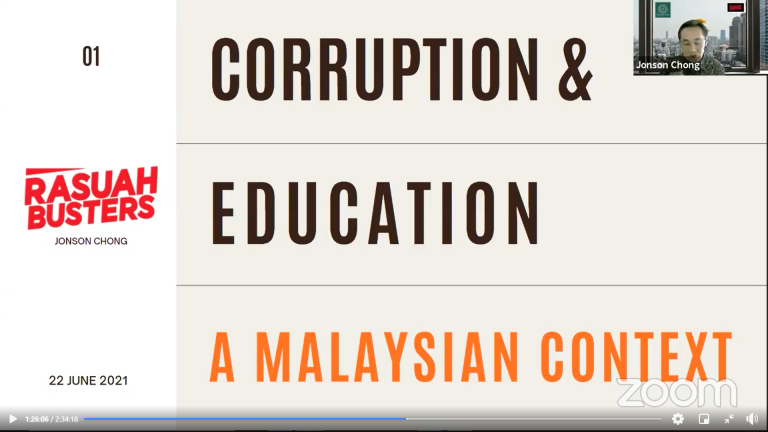 Johson Chong gave three main issues in his commentary; ‘everyday corruption’ is a symptom, favouritism in more ways than one, and the problem determines the solution. He elaborated that greed and the belief that the pursuit of material gains produces real wealth are the actual cause of corruption. Asymmetry of information, burdensome bureaucracy and poor social norms are just the conditions for corruption. He also brought up the questions of cronyism and nepotism when the government of the day favours friends and the privatization model to provide public goods. Lastly, he suggested that the report should address values as it is the best regulator of human behaviour, not the laws and regulations.
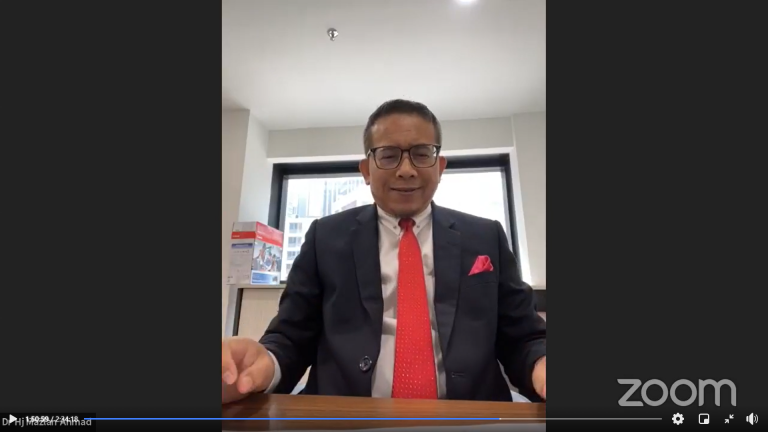 Dr Mazlan pointed out the need to recognize that one of the contributors to increasing numbers of corruption is the giver. According to him, one of the strategies adopted by MACC is collaborating with various parties to create their own internal whistleblowing policy. The commission also runs awareness programmes with universities, corporate firms, government sectors, and individuals. Lastly, he concluded that to avoid conflict of interest, one must be transparent.
For those who missed the webinar session and would like to watch it, the video recording of the webinar is available below.
