
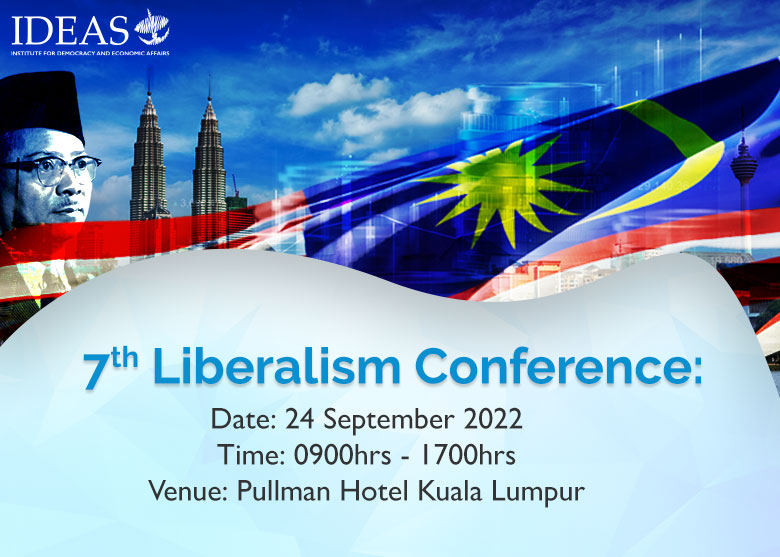
IDEAS hosted its 7th Liberalism Conference on the 24th of September 2022 at the Pullman Hotel Kuala Lumpur. This conference is an annual exercise to deliberate on the overall progress towards “A Malaysia that upholds the principles of liberty and justice”, as espoused by Malaysia’s founding father, Almarhum Tunku Abdul Rahman Putra Al-Haj. It was attended by almost 160 guests, including the Regional Head of the Friedrich Naumann Foundation for Southeast and East Asia, Mr Moritz Kleine-Brockhoff, and other important delegates from various think tanks and universities alike. The world has no doubt faced various economic downturns to geopolitical instability. While Malaysia escaped the worst of these, the problem of an unstable government and a weak economy remains. Historically, major crises have been the harbinger of authoritarian governments. In these unstable times, there is a yearning among the people for a more authoritarian and “stable” government, which some are convinced can steer the country back onto the right track.Download the related event item here:
 Our conference began with the Merdeka Centre’s latest survey, ‘Perceptions Towards Liberalism in Malaysia’, which showcased Malaysians developing a growing hesitation toward the concept of liberalism. It was shown that perceptions of liberalism as a ‘bad concept’ for Malaysia jumped 20 points between 2016 and 2021, from 22% to 48%, respectively. When the respondents were broken down by socio-economic status, it provided striking data – such as that 65% of Malay respondents believed liberalism was a bad concept, while 62% and 66% of Chinese and Indians respectively believed it was a good concept. Likewise, a higher proportion of rural to urban respondents (50% to 28%) believed liberalism was a negative concept. The conversation stemmed from the launch showed that these deep social cleavages in attitudes suggest Malaysians today live in a polarised society, with ethnic and geographic divisions increasingly determining attitudes towards liberalism and the open society.As Malaysia faces political instability and uncertainty, with governments dependent on thin majorities and arrangements with political rivals to govern. Growing pressure to implement populist policies in lieu of technocratic governance with regard to providing social protection programmes also exist. This pressure is expected to increase as the country prepares for its 15th general election amid marked inflationary pressures. Over the last months, the Malaysian government has resorted to populist measures in response to rising costs of living. This has included, among other things, banning the export of chickens and imposing price controls on selected essential products. Many of the government’s knee-jerk responses to the cost of living crisis have highlighted Malaysia’s inadequate social safety nets and social protection policies. As Malaysia navigates a post-pandemic world, our first panel looked into the shift in policy discourse towards more sustainable long-term policies that are outward-looking. Additionally, they discussed the current gaps in Malaysia’s social protection system that must be rectified to provide more adequate cushions for vulnerable Malaysians in the event of future downturns.Misinformation or disinformation can be understood as a deliberate provision of false or inaccurate information to mislead and promote an alternative narrative. The widespread adoption of social media around the world has allowed malicious actors to spread disinformation faster and to a wider audience than ever, threatening democratic values and practices, nurturing greater mistrust of institutions, and dividing societies more than ever. Governments, civil society, private sectors and citizens, in general, recognise disinformation as a problem, with each of them having proposed different ways of dealing with it.Governments worldwide, including Malaysia, have enacted laws targeting so-called “fake news” and created fact-checking websites. Private entities have encouraged digital literacy and have started actively monitoring content. In this session, our panel discussed the extent of these initiatives in contributing to the the growth of misinformation. They also shared their views on the harm that can be created should there be given involvement for governments and private actors to curtail open discourse, as has been the case in Malaysia, for a more democratic and free society.Politics in Malaysia and around the world are battling with increasing polarisation, divisiveness and the rise of populism. Scholars have attributed these trends to many factors. In Europe, the migrant crisis of 2015 fuelled resentment in societies already deeply affected by unemployment and a stagnating economy. The same sentiments also emboldened American supporters of Trump, who represented a rejection of so-called “coastal elites” who are perceived to control politics, culture and the economy. These feelings are not new but have seen a resurgence exacerbated by social media.Malaysian politics is an art of balancing the diverse interests of the different groups in our society – already divided by race, religion, social class, and, more recently, generations. The 2018 elections, the Pakatan Harapan administration and its subsequent collapse gave Malaysians a glimpse of what a more multiracial government could look like. Post-Sheraton, that glimmer of hope seems to be threatened once again, with UMNO predicted to win the next general election. In this session, our panel looked into the increasing apathy towards electoral democracy, especially in the younger generation, where there discussed a future for moderate politics in Malaysia. They also touched into the context of “Malay politics”, often associated with “Ketuanan Melayu”, and shared their opinions of a different way to channel a more inclusive version of race-based politics in Malaysia.
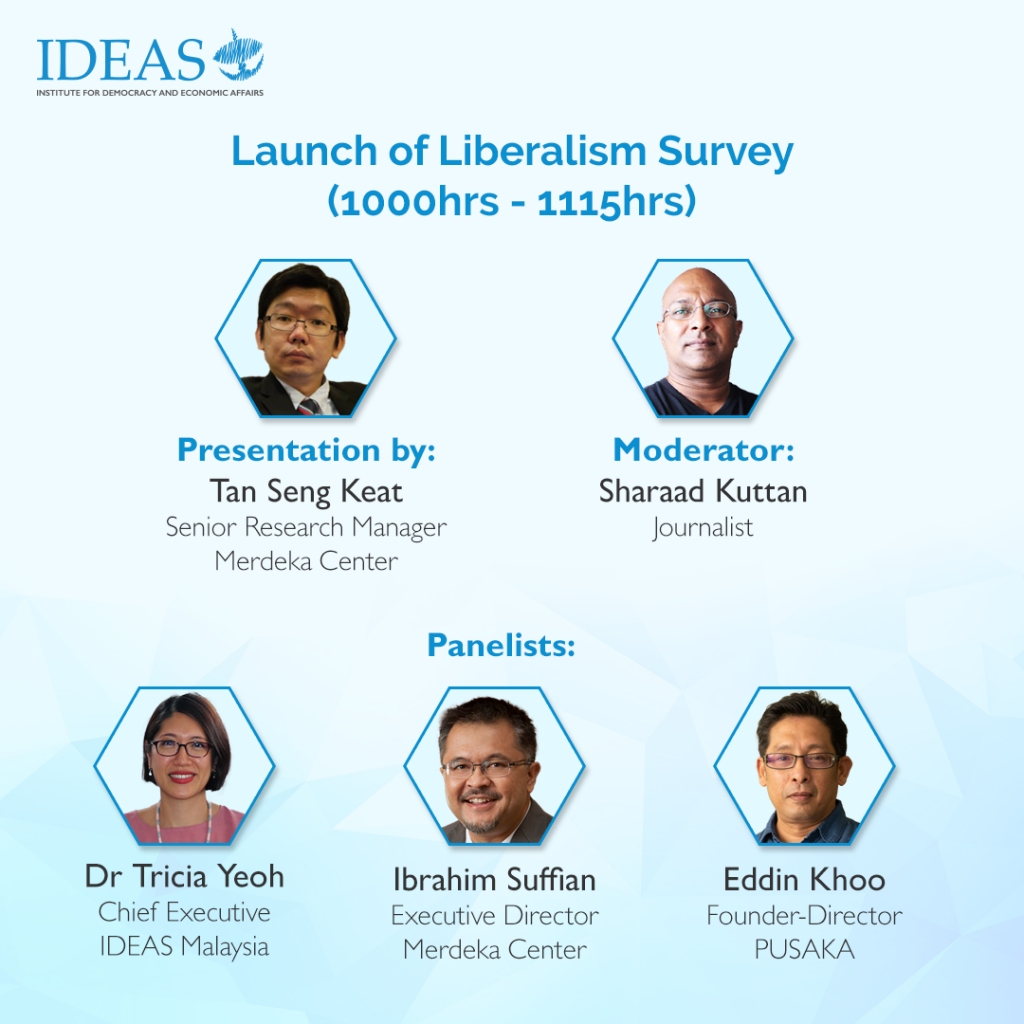 Our conference began with the Merdeka Centre’s latest survey, ‘Perceptions Towards Liberalism in Malaysia’, which showcased Malaysians developing a growing hesitation toward the concept of liberalism. It was shown that perceptions of liberalism as a ‘bad concept’ for Malaysia jumped 20 points between 2016 and 2021, from 22% to 48%, respectively. When the respondents were broken down by socio-economic status, it provided striking data – such as that 65% of Malay respondents believed liberalism was a bad concept, while 62% and 66% of Chinese and Indians respectively believed it was a good concept. Likewise, a higher proportion of rural to urban respondents (50% to 28%) believed liberalism was a negative concept. The conversation stemmed from the launch showed that these deep social cleavages in attitudes suggest Malaysians today live in a polarised society, with ethnic and geographic divisions increasingly determining attitudes towards liberalism and the open society.
Video for Launch of Liberalism Survey:
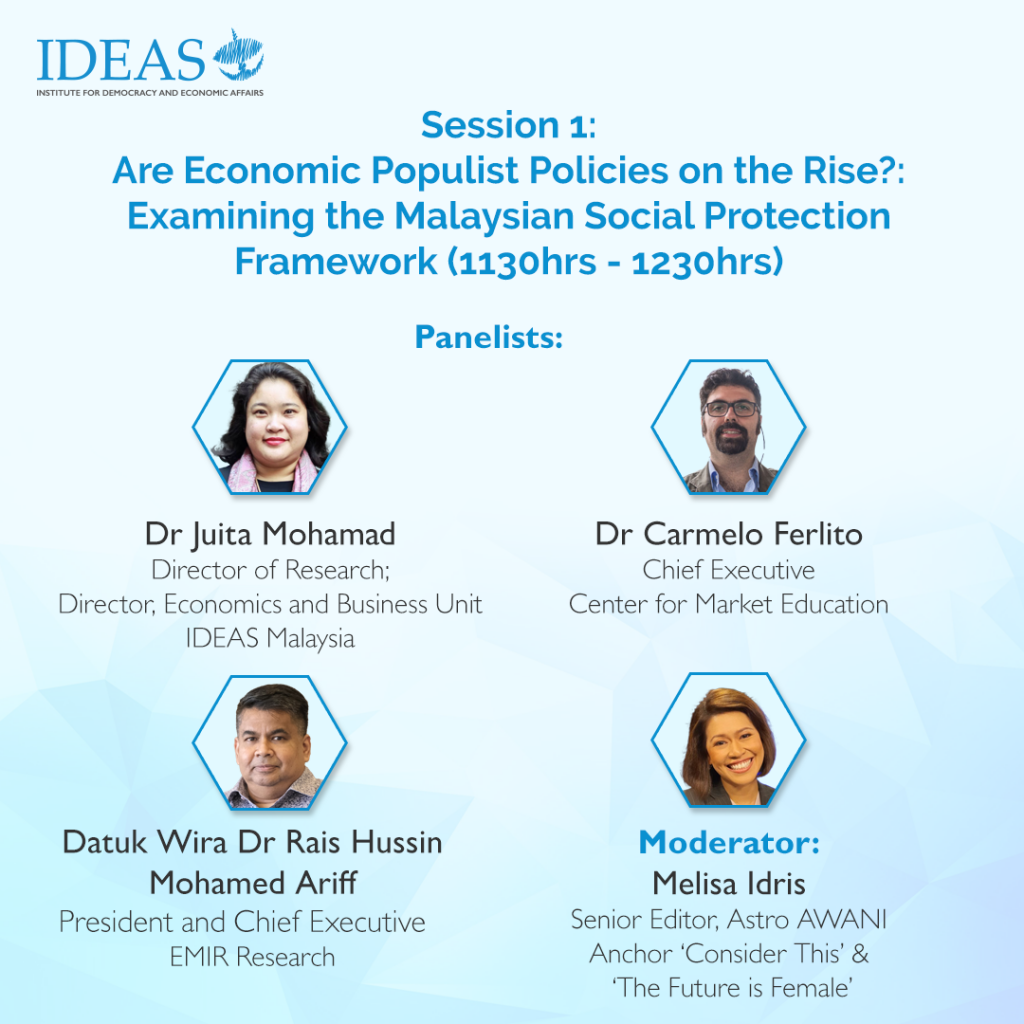 As Malaysia faces political instability and uncertainty, with governments dependent on thin majorities and arrangements with political rivals to govern. Growing pressure to implement populist policies in lieu of technocratic governance with regard to providing social protection programmes also exist. This pressure is expected to increase as the country prepares for its 15th general election amid marked inflationary pressures. Over the last months, the Malaysian government has resorted to populist measures in response to rising costs of living. This has included, among other things, banning the export of chickens and imposing price controls on selected essential products. Many of the government’s knee-jerk responses to the cost of living crisis have highlighted Malaysia’s inadequate social safety nets and social protection policies. As Malaysia navigates a post-pandemic world, our first panel looked into the shift in policy discourse towards more sustainable long-term policies that are outward-looking. Additionally, they discussed the current gaps in Malaysia’s social protection system that must be rectified to provide more adequate cushions for vulnerable Malaysians in the event of future downturns.
Video for Session 1:
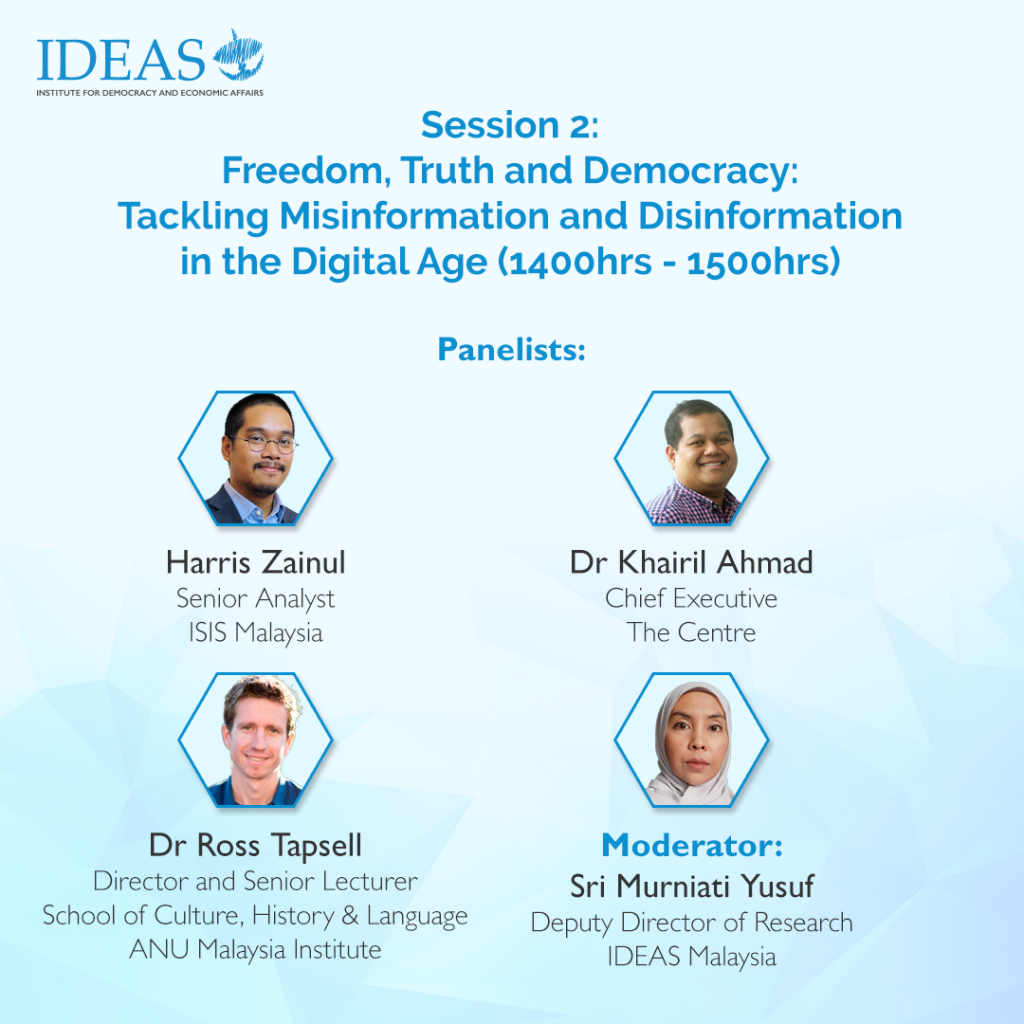 Misinformation or disinformation can be understood as a deliberate provision of false or inaccurate information to mislead and promote an alternative narrative. The widespread adoption of social media around the world has allowed malicious actors to spread disinformation faster and to a wider audience than ever, threatening democratic values and practices, nurturing greater mistrust of institutions, and dividing societies more than ever. Governments, civil society, private sectors and citizens, in general, recognise disinformation as a problem, with each of them having proposed different ways of dealing with it.Governments worldwide, including Malaysia, have enacted laws targeting so-called “fake news” and created fact-checking websites. Private entities have encouraged digital literacy and have started actively monitoring content. In this session, our panel discussed the extent of these initiatives in contributing to the the growth of misinformation. They also shared their views on the harm that can be created should there be given involvement for governments and private actors to curtail open discourse, as has been the case in Malaysia, for a more democratic and free society.
Video for Session 2:
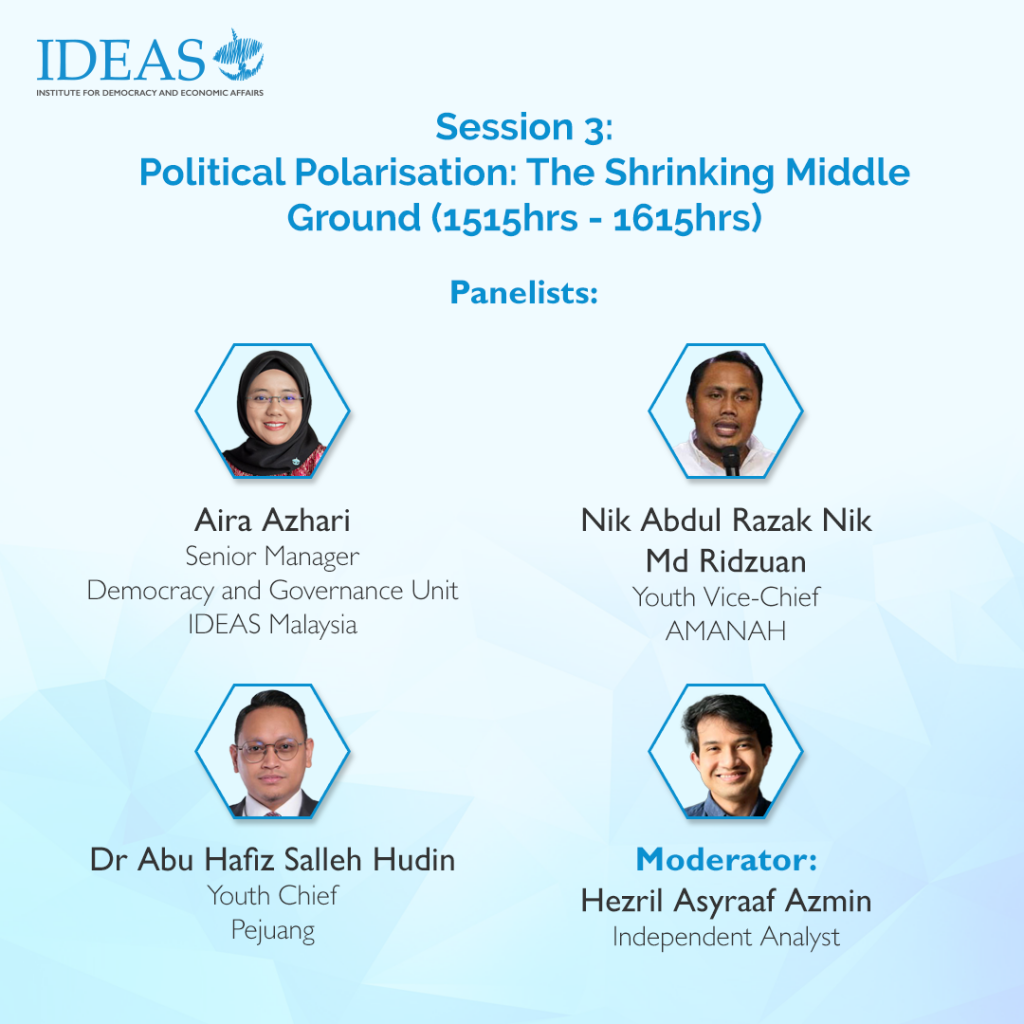 Politics in Malaysia and around the world are battling with increasing polarisation, divisiveness and the rise of populism. Scholars have attributed these trends to many factors. In Europe, the migrant crisis of 2015 fuelled resentment in societies already deeply affected by unemployment and a stagnating economy. The same sentiments also emboldened American supporters of Trump, who represented a rejection of so-called “coastal elites” who are perceived to control politics, culture and the economy. These feelings are not new but have seen a resurgence exacerbated by social media.Malaysian politics is an art of balancing the diverse interests of the different groups in our society – already divided by race, religion, social class, and, more recently, generations. The 2018 elections, the Pakatan Harapan administration and its subsequent collapse gave Malaysians a glimpse of what a more multiracial government could look like. Post-Sheraton, that glimmer of hope seems to be threatened once again, with UMNO predicted to win the next general election. In this session, our panel looked into the increasing apathy towards electoral democracy, especially in the younger generation, where there discussed a future for moderate politics in Malaysia. They also touched into the context of “Malay politics”, often associated with “Ketuanan Melayu”, and shared their opinions of a different way to channel a more inclusive version of race-based politics in Malaysia.