
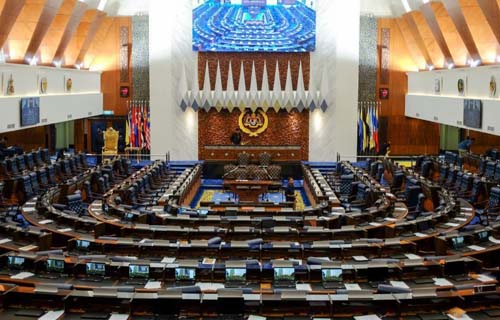
Kuala Lumpur, 8th August 2024: The Institute for Democracy and Economic Affairs (IDEAS) has published its latest policy paper, “Fiscal Responsibility During Political Transitions: The Use of the Vote on Account in Malaysia.” This paper proposes recommendations to improve the process of “interim budget”in Malaysia to ensure accountability and continuity of government expenditure when a full budget is not passed before the start of the fiscal year.
The impetus for this paper was when, ahead of the 15th General Election, then Prime Minister Dato’ Sri Ismail Sabri Yaakob dissolved Parliament on 10 October 2022 after introducing the 2023 budget, but before the Supply Bill was passed. The Supply Act is the legislation required to permit government spending in the following year, and is typically passed by October of the previous fiscal year.
With only six weeks remaining in the fiscal year and elections scheduled for 19 November, the resulting hung parliament delayed the first session of Parliament to 19 December. The government relied on Article 102(a) of the Federal Constitution, using the vote on account to authorise spending without a full Supply Bill on 20 December 2022. The complete budget estimates for 2023 were eventually approved on 24 February 2023, almost two months after the start of the fiscal year.
Malaysia’s constitutional framework under Article 102(a) provides for a vote on account when the budget for the upcoming fiscal year is delayed. While this mechanism has been used in Malaysia in 1990, 1999, and 2022, our parliamentary conventions surrounding it are less developed compared to other Westminster-style democracies and could be enhanced to improve accountability and fiscal responsibility.
The paper compares Malaysia’s use of the vote on account with practices in the United Kingdom, India, Sri Lanka, and New Zealand for authorising expenditure in advance of a full budget. The paper highlights how specific conventions and regulations can balance executive flexibility with legislative accountability, a contrast to Malaysia’s less established practices.
Based on these practices, the paper makes the following recommendations:
- Establish clear guidelines on the proportion of expenditure authorised by the vote on account and setting limits on how long the government can operate without a full budget.
- Require outgoing governments to propose a vote on account if they dissolve Parliament between September and December.
- Mandate that the government report on the utilisation of the vote on account and that the Auditor General certifies no new expenditures were committed before the budget’s approval.
- Considering longer-term improvements, such as adopting an imprest system similar to New Zealand’s or fixing election windows to avoid disruptions in the fiscal cycle. The imprest provides rolling advances for government spending which are ratified together with the authorisations for the budget and for supplementary spending.
“IDEAS recognises and commends the government’s continued commitment to carry out fiscal reforms. Through this paper, we would like to highlight the importance of oversight and accountability continuing even across political transitions. Effective management of transitional budgets is crucial for maintaining fiscal stability. As Malaysia’s democracy matures, it is possible that political transitions take place at more unpredictable times. By implementing these recommendations, Malaysia can enhance its fiscal oversight during times of political uncertainty,” commented Alissa Rode, author of the paper and Senior Manager of Research at IDEAS.
For more information, visit our website to download the paper
— TAMAT —
Download Media Statement PDF File Here
For enquiries, please contact:
Ryan Panicker
Assistant Manager, Advocacy and Events
T: 03 – 2070 8881/8882 | E: ryannesh@ideas.org.my

Belanjawan berdaya tahan